Your client will spend two hours with you on the shoot and two weeks with the gallery. They will open it on a phone in bed, forward the link to their mother, screenshot three frames for Instagram, and come back to it a year later on an anniversary. That gallery is the version of your work that actually circulates.
Which means the handover is not admin. It is the last creative decision you make about a shoot - and the one most photographers improvise. Here is a process that removes almost all of the follow-up email.
Set the number before you shoot
Most delivery friction is expectation friction, and it starts long before the edit.
- Put a photo count in the contract. "60–80 edited images" is a promise you can keep. "All the good ones" is an argument waiting to happen.
- Say what is not included - outtakes, near-duplicates, RAW files. Saying it once in writing is kinder than saying it three times over email later.
- Quote the delivery window in business days, then privately aim to beat it by three. A gallery that arrives early is a gift; the same gallery arriving on the promised day is merely correct.
Cull hard, then cull again
Speed comes from separating the passes instead of trying to judge everything at once.
- Pass one - technical only. Closed eyes, missed focus, blown highlights. Do not think about which frame is better; just remove the ones that are broken. Fast and unsentimental.
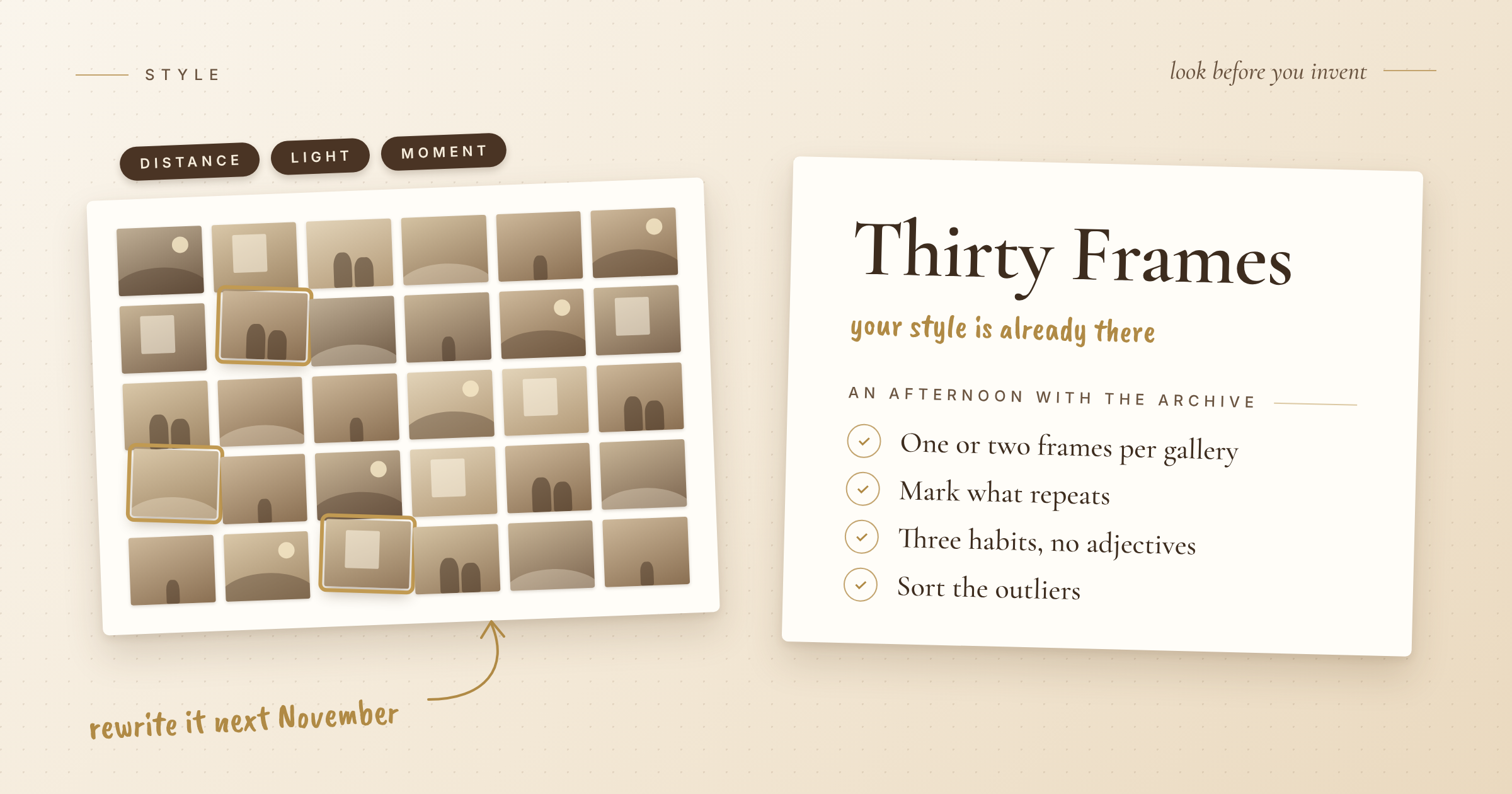
- Pass two - one frame per moment. If three shots cover the same beat, keep the strongest and cut the rest. Near-duplicates do not add value; they dilute the frames around them.
- Pass three - read it as a sequence. Look at the set as a whole and cut anything that repeats an emotional note you have already hit.
Sixty strong frames sell better than two hundred frames with sixty strong ones buried inside. Volume is not generosity - it is unfinished work handed to the client to sort.
Build the gallery like an edit, not a dump
- Choose a cover that carries the story, not just your technically best shot. Horizontal, with breathing room around the subject, so it survives being cropped into a link preview.
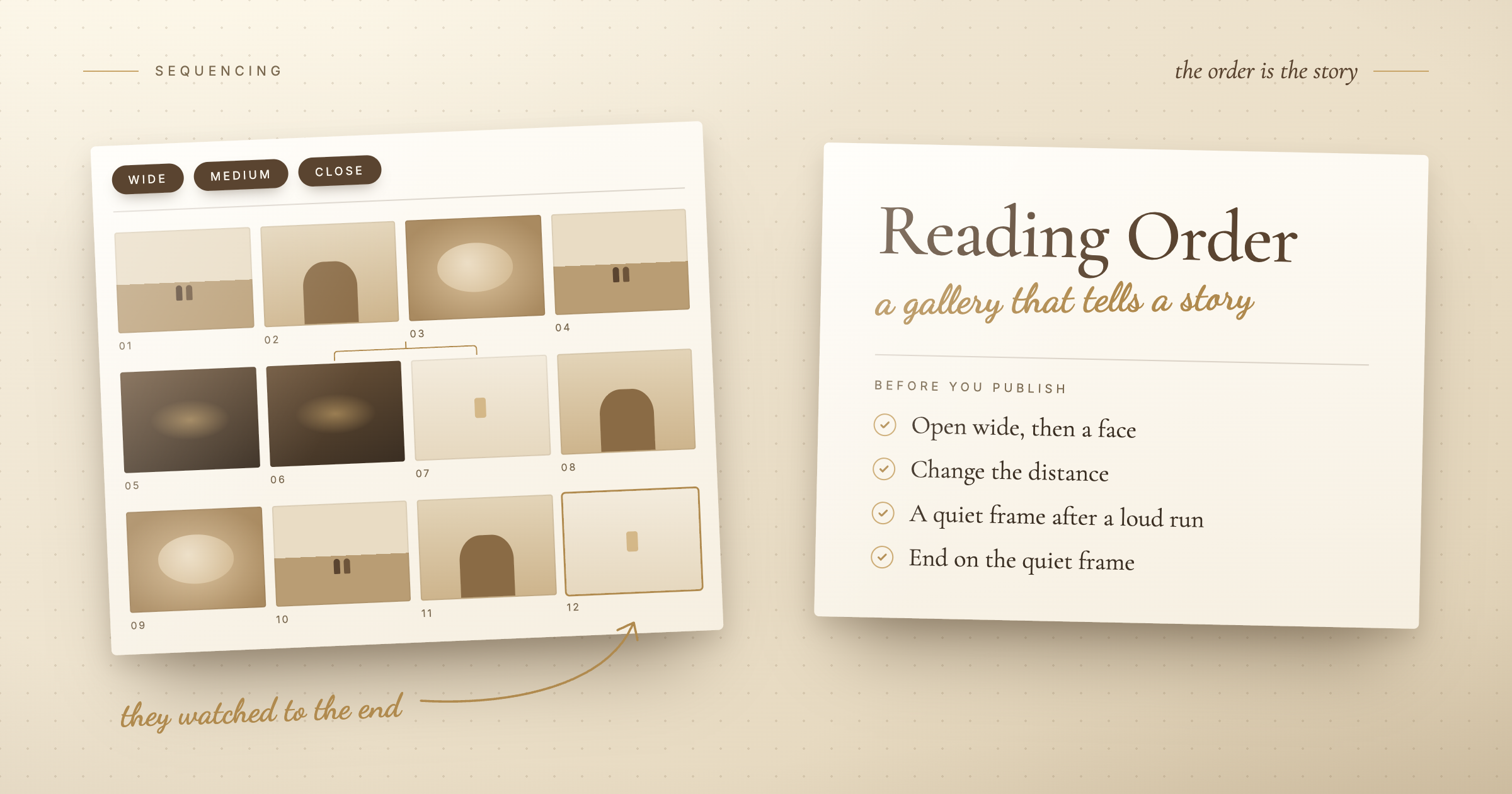
- Order chronologically by default - arrival, preparation, the main event, the quiet frames at the end. Clients read galleries as narrative even when they cannot articulate why one order feels better.
- Keep the grade consistent. One warm frame in a cool set reads as a mistake, however good it is on its own.
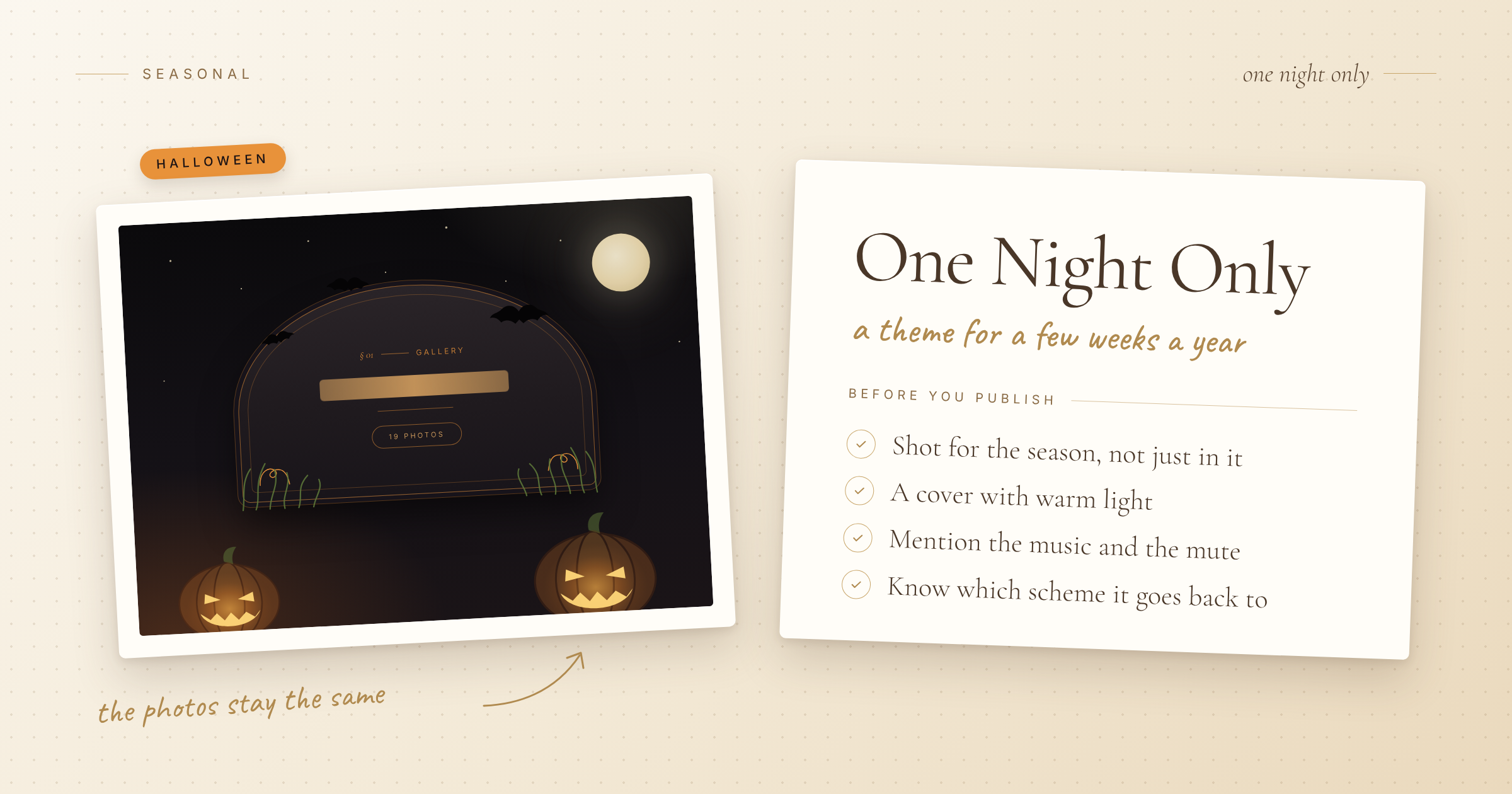
- Match the layout to the work. Airy, high-key sets want a light background and generous spacing; moody editorial work wants a dark scheme and tighter grid.
- Open it on your phone before you send it. Most clients will. A cover that looks stately on a 27-inch display can crop into something unrecognisable at 390 pixels wide.
Write a handover message that answers everything
Every question a client asks after delivery is a question the delivery email failed to answer. Write it once, save it as a template, and change three lines per client.
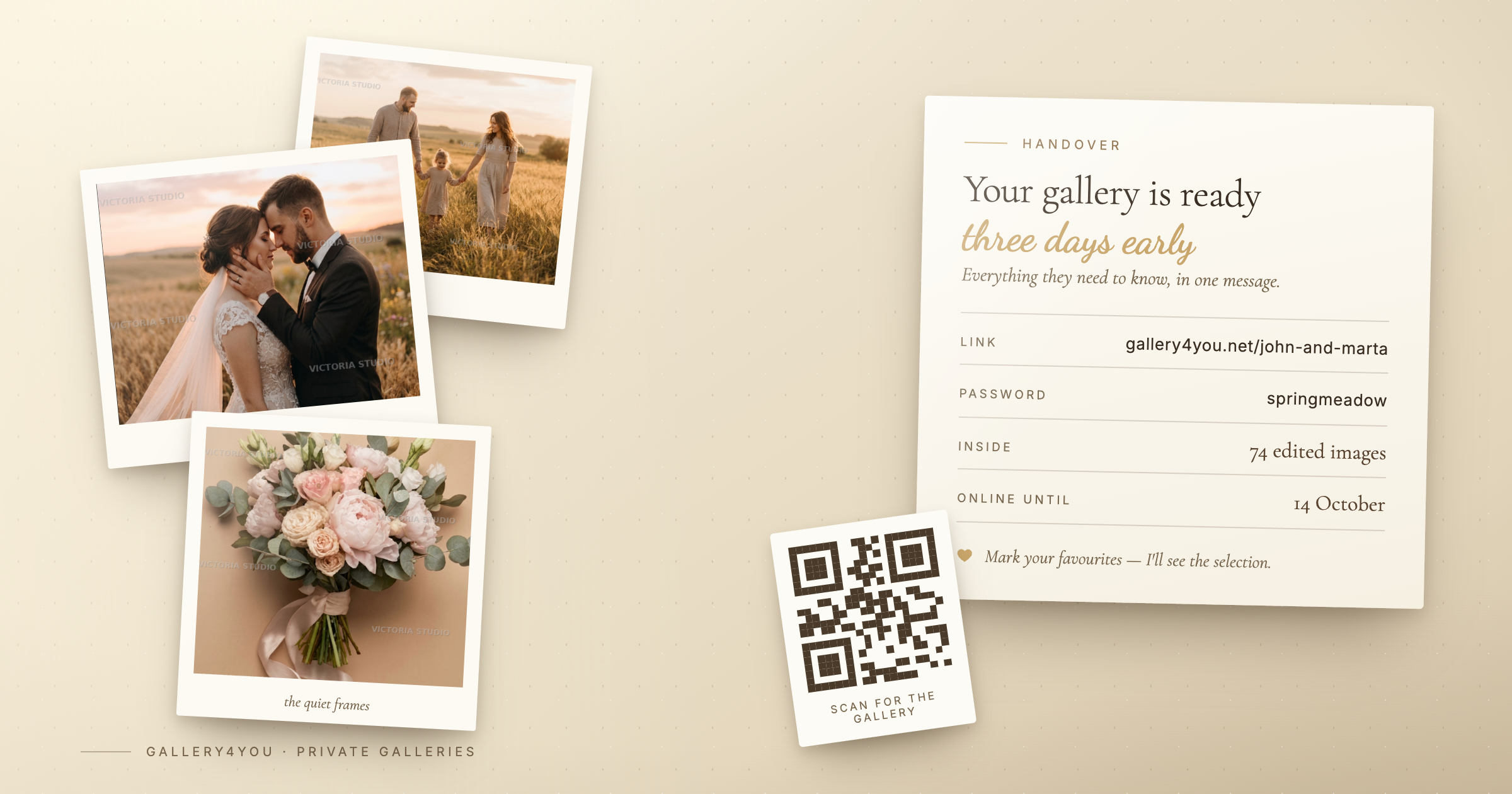
Hi Anna - your gallery is ready, three days early.
Link: [gallery link] · Password: springmeadow
Inside you will find 74 edited images. Click any photo to open it full-screen; the download button at the top right saves the whole set as a ZIP, or tick individual photos to download just those.
If you would like an album, mark your favourites with the heart icon and I will see your selection automatically - no need to send me a list of file names.
The gallery stays online until 14 October. Do download a copy for yourself before then.
Five things, always: the link, the password, what is inside, how to download, and how long it stays up. Everything else is optional.
Protect the work without making it feel guarded
- Password-protect anything private - weddings, family sessions, corporate events with people who did not consent to a public link.
- Watermark previews only while payment is outstanding, and deliver the final set clean. A permanent watermark on paid work tells the client you do not trust them.
- Use an expiration date as a gentle deadline, not a trap. It moves people to download and to order prints - but only if you warn them in the handover message and again a week before.
- Never make a client create an account. Every login screen between your client and their photos is a step where enthusiasm leaks out.
Let the gallery do your follow-up
The handover is the beginning of the second half of the job.
- Favourites tell you what to sell. If a client hearts twelve frames, those twelve are your album spread and your print pitch - you no longer have to guess.
- Dwell-time analytics tell you the same thing more honestly. The image someone returns to four times is the one to print large, even if they never marked it.
- Ask for the review on day two or three, while the gallery is still open in a browser tab. A month later you are competing with their ordinary life.
- Leave a QR card behind at the shoot so the link is on the fridge, not buried in an inbox.
The five-minute pre-send checklist
- Cover image chosen and checked on a phone
- Sequence reads chronologically, no duplicate moments
- Grade consistent across the whole set
- Password set and included in the message
- Expiry date set, and mentioned
- Download tested - one photo and the full ZIP
- Handover message names the count, the deadline and the next step